
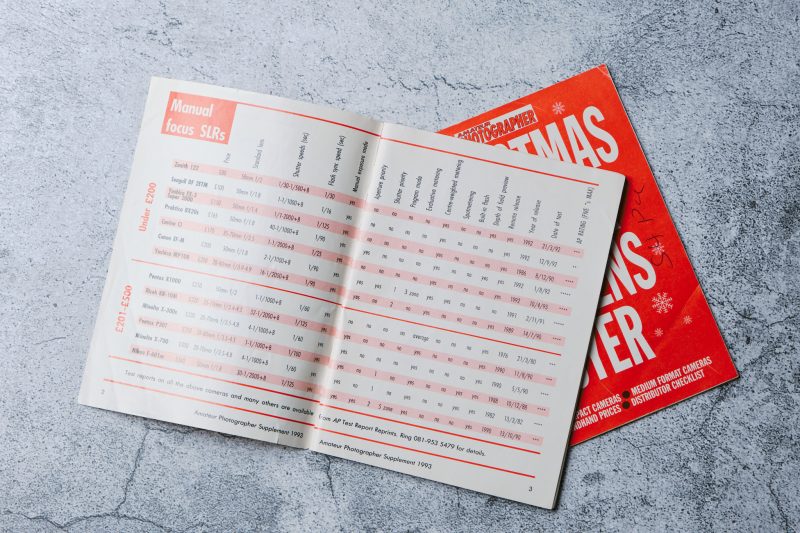
I recently rediscovered some old Amateur Photographer camera price guides from 1993. That year was really in the peak of film photography, with a huge range of manual focus and autofocus SLRs all on the market at the same time; there really was a camera for everyone no matter your budget.
1993 was really a year of transition and overlap between older style mechanical cameras and advanced electronic cameras with autofocus and matrix metering. The list of cameras for sale was fascinating, with several models released ten or more years before still available to buy new, such as the Pentax K1000 (1976), the Nikon F3 (1980), and the Canon F-1N (1981). Today it would be hard to imagine a camera released in 2016 still being sold new, most models only seem to last a few years before they are superseded. In 1993 the camera manufacturers had not abandoned their older designs, and in some cases these offered a very affordable way into photography. Looking at the table of cameras, and the full info document linked below, you can also see that in 1993 autofocus was not a luxury anymore, it was found in some quite affordable cameras such as the Canon EOS 1000N at £300. Autofocus was relatively basic with just a single focus point, but it as already capable of single and continuous focussing.
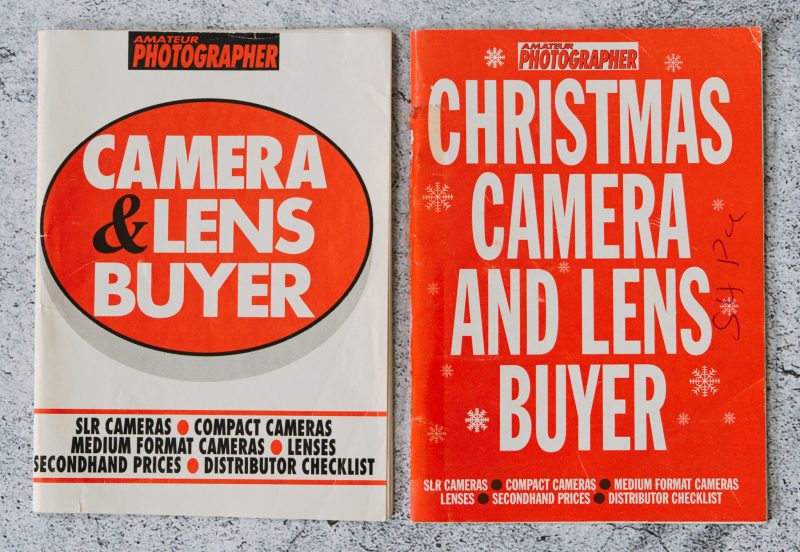
Looking at the ever increasing prices of cameras and lenses it would be easy to assume that photography today is more expensive than it was in 1993, but what does the data actually say?
Using the price guides and an inflation calculator I have compared some of the prices from 1993 to what is available today, trying to match the equipment as closely as I can considering the huge difference in technology. I have also found some interesting changes in the photography market in the years since 1993.
Let’s first look at cameras, then we will take a look at lenses to see how they stack up to today’s prices.
The Massive Camera Price Divide
An interesting thing about film cameras is that for most practical purposes the camera body makes remarkably little difference to the image quality. A film camera body is basically a box with a hole in it to expose the film, and whether you had a Canon or a Nikon you still used the same film so there were no differences in the ‘sensor’ as you see in digital cameras today.
In the film days the key differences between camera bodies came down to a few areas:
- Ease of use – autofocus/different exposure modes/autowinders/etc.
- Build quality – pro cameras were generally built to withstand much more use than consumer models.
- Lens mount – Just like today the different brands all had different lens mounts, so you bought into a lens system instead of just a camera
Because there were no expensive image sensors in cameras back then a basic camera could have a genuinely low price. In the table below I have given a snapshot of the some of the cameras available in 1993 showing the price they cost back then, and an inflation adjusted price to give an idea of how expensive they would be today. I have used the price with a kit lens included where available.
| Camera Name | Type | Price in 1993 | Adjusted Price in 2026 |
|---|---|---|---|
| Zenit 122 | Manual focus 35mm SLR | £80 | £177 |
| Yashica FX-3 Super 2000 | Manual focus 35mm SLR | £150 | £331 |
| Canon EF-M | Manual focus 35mm SLR | £200 | £442 |
| Pentax P30T | Manual focus 35mm SLR | £250 | £552 |
| Nikon FM2 | Manual focus 35mm SLR | £530 | £1,171 |
| Nikon F3 | Manual focus 35mm SLR | £1,210 | £2,674 |
| Chinon Genesis III | Autofocus 35mm SLR | £190 | £420 |
| Canon EOS 1000N | Autofocus 35mm SLR | £300 | £663 |
| Canon EOS 10 | Autofocus 35mm SLR | £485 | £1,072 |
| Pentax Z-1 | Autofocus 35mm SLR | £650 | £1,436 |
| Nikon F4 | Autofocus 35mm SLR | £1,690 | £3,735 |
| Lubitel 166U | Medium format camera | £28 | £62 |
| Mamiya C330 | Medium format camera | £600 | £1,326 |
| Hasselblad 205 TCC | Medium format camera | £7,272 | £16,069 |
The Zenit 122 was a pretty basic and very plastic camera with Soviet heritage, but for £80 you got a fully functional 35mm camera with electronic metering and the Helios-44M lens that is now considered a bit of a vintage classic. This would have been enough to get started, but if you wanted to step up to a better known brand you could have picked up a brand new Pentax for £250 with a kit zoom lens, as my parents did for me.
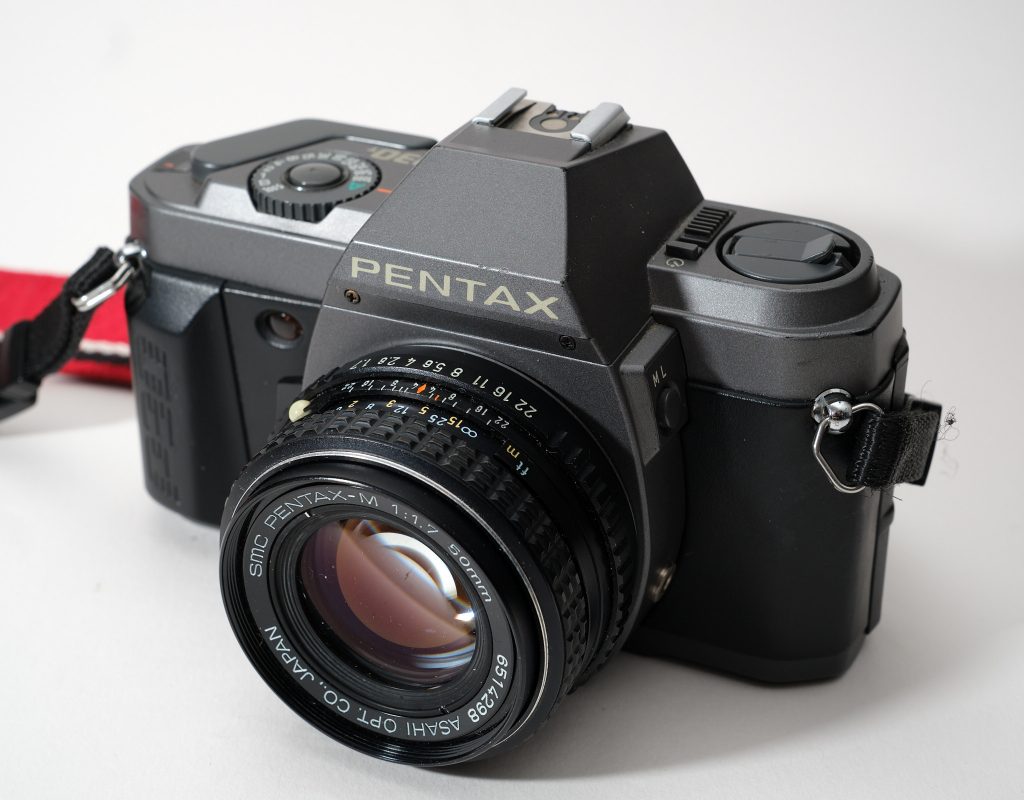
If you had deeper pockets or needed a reliable camera for press or wedding photography you might have looked at the Nikon F3 or F4 cameras, both of which are well into the thousands in today’s money.
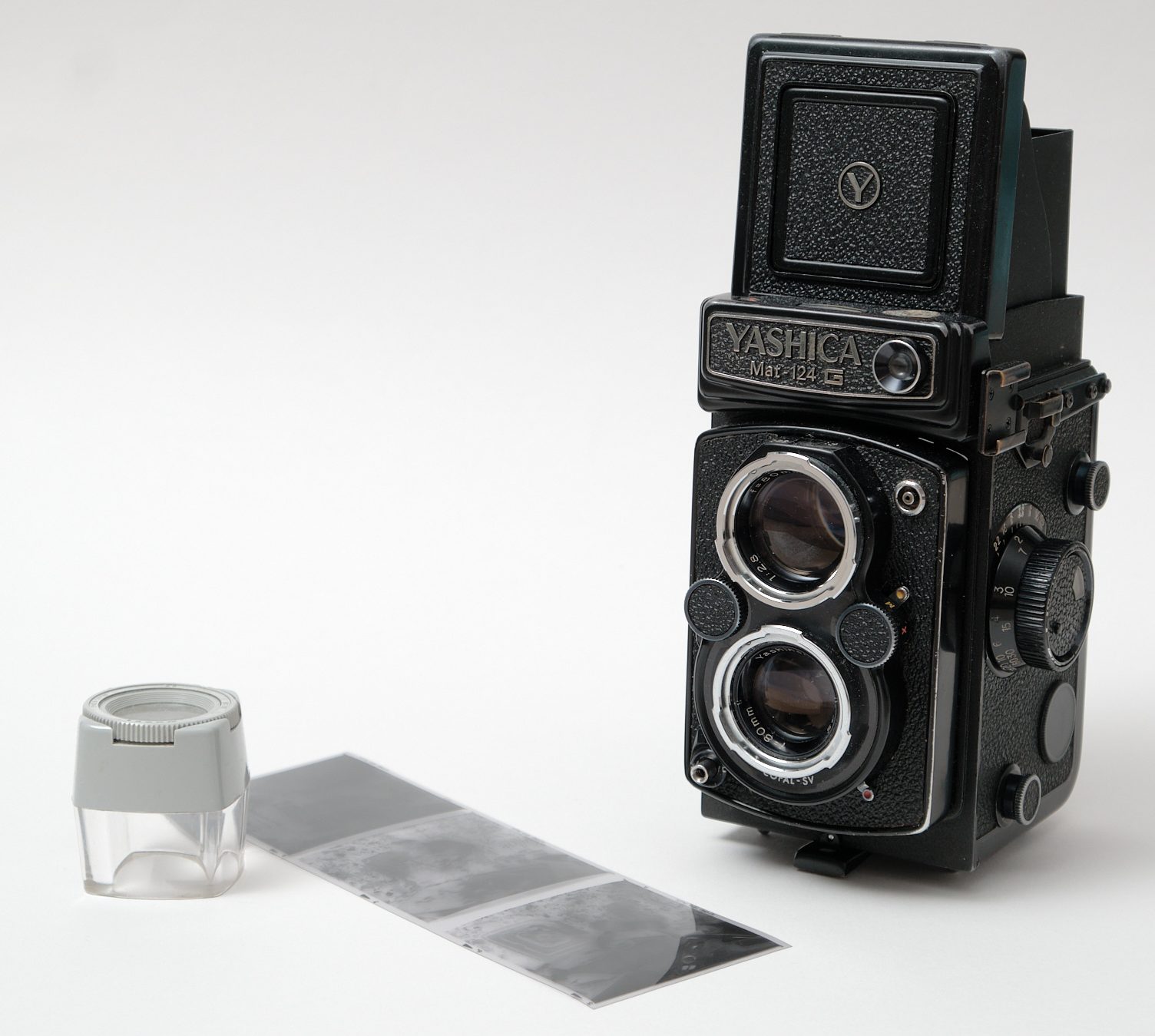
For medium format the range of prices was just as wide as in 35mm cameras. At the cheaper end there was the Lubitel 166U TLR (twin lens reflex) for the equivalent of £62, while at the extreme high end a pro fashion photographer might have bought a Hasselblad 205 TCC, which in today’s money would be a staggering £16,000.
When we look at what these prices equate to today some of them look very cheap while others are very much out of the reach of your typical amateur, as they were back then. At the cheap end of the market it seems we have lost these really affordable options. Based on a quick search of my favourite camera retailer the cheapest camera and lens bundle I can find is the Panasonic Lumix G100D with a 12-32mm lens at £549, which is 3x more expensive than the low end option we had in 1993. Of course that is not a completely fair comparison as you need to add the significant cost of film and developing on to the cost of a film camera, which over the years can add up to a lot more than the purchase price of the camera itself.
Just for the sake of comparison let’s say that you shot 50 rolls of cheap film on your Zenit 122 camera and had them all developed and printed, this would add a huge amount to the price of the camera:
- Film: £3.50 per roll x 50 = £175
- Develop and print: £5 per roll x 50 = £250
- Total: £435
This is equivalent to £935 in 2026 money, and this is for only 1,800 shots which seems tiny by today’s standards. If we add this to the cost of the budget Zenit camera we end up with a total price of £1,112! Today with digital cameras people think nothing of shooting hundreds of shots in a single day. Shooting hundreds of shots a day with a film camera was a great way to bankrupt yourself even back in 1993.
Looking to the higher end 35mm cameras, a pro grade autofocus Nikon F4 with a 50mm f1.4 lens was £3,735 in 2026 money. An equivalent Nikon camera today might be the Z7 II with a 24-70mm f4 lens, which is available for £2,349 (discounted from £3,049), so substantially cheaper even if we don’t include the cost of the film!
What About Lenses?
Looking back to the lenses from 1993 they are not directly comparable to lenses from today as technology has moved on massively, but they were still divided between amateur or entry level lenses, and professional grade lenses. There was a range of companies manufacturing lenses back in 1993 including many of today’s well known brands such as Canon, Nikon, Leica, Minolta (which would become Sony), Olympus, Pentax, and Sigma. Both Canon and Nikon were making a range of lenses in 1993, so for this comparison we can focus on their offerings to get an idea of how they stack up to the prices of today.
| Name | Type | Price in 1993 | Adjusted Price in 2026 |
|---|---|---|---|
| Canon EF 28-80mm f/3.5-5.6 | Standard Zoom | £239 | £528 |
| Canon EF 28-80mm f/2.8-4L | Professional Zoom | £1172 | £2590 |
| Canon EF 50mm f/1.8 | Standard Prime | £75 | £165 |
| Canon EF 50mm f/1L | Professional Prime | £1850 | £4087 |
| Canon EF 85mm f/1.2L | Professional Prime | £1418 | £3133 |
| Nikon 28-70mm f/3.5-4.5D | Standard Zoom | £340 | £751 |
| Nikon 35-70mm f/2.8D | Professional Zoom | £720 | £1591 |
| Nikon 50mm f/1.8 | Standard Prime | £90 | £199 |
| Nikon 50mm f/1.4 | Professional Prime | £270 | £597 |
Canon Lenses
The Canon EF mount was a relatively new autofocus lens mount in 1993, and while some EF mount lenses are still available most new lenses today are offered with the RF mount to suit mirrorless cameras. In the price comparisons below I have used only full frame lenses. In 1993 there was no concept of APSC cameras with their smaller and cheaper lenses, so to have the fairest comparison I am using lenses which would have covered the full 35mm film frame size.
- Standard Zoom – We can compare to the Canon RF 24-105 f/4-7.1 IS STM lens at £479. The modern lens is more advanced with image stabilisation and a wider zoom range, but is actually cheaper than the 1993 equivalent
- Professional Zoom – The best comparison today is with the Canon RF 24-70mm f/2.8L lens at £2,499. This price is remarkably similar to the 1993 price even though the new lens features better optics and focusing, and includes image stabilisation.
- Standard Prime – We can directly compare to the Canon RF 50mm f/1.8 lens, the cheapest lens in the RF mount line up at £219. This is a significant increase in price for the entry level prime lens, which hopefully has been matched by an increase in performance.
- Professional Prime 50mm – The f/1 lens from 1993 was a very ambitious and exotic lens even by the standards of today, there is no direct equivalent but we can compare it to the Canon RF 50mm f/1.2L at £2,499. This is a significant drop in price for the top of the range 50mm prime lens. Perhaps this is due to improvements in manufacturing making it easier to make this kind of lens, but the price still puts it outside the reach of many amateurs just as the old lens would have been in 1993.
- Professional Prime 85mm – The EF 85mm f/1.2L compares directly to the newer Canon RF 85mm f/1.2L which currently costs £2,999, so a little cheaper than the older lens in real terms.
Nikon Lenses
Back in 1993 Nikon was using the F mount for their cameras, this lens mount continued well in the 2010’s but has now been replaced with the Z mount designed for mirrorless cameras. As with the Canon lenses I am comparing to full frame lenses as there were no APSC cameras in 1993.
- Standard Zoom – We can compare the Nikon 28-70mm f/3.5-4.5D to the new Nikon Z 24-70mm f/4 S lens at £749. This price is very similar to the adjusted prices from 1993.
- Professional Zoom – The Nikon 35-70mm f/2.8D could be compared with the current typical pro zoom, the Nikon Z 24-70mm f2.8 S at £1,999 today. This is a roughy a 25% increase in real costs.
- Standard Prime – The old 50mm f/1.8 prime can be directly compared to the new Nikon Z 50mm f/1.8 S lens at £469 today. In this case there is a huge 135% increase between the lenses from 1993 and 2026 in real terms. If you are happy to compare to a 40mm lens then the Nikon Z 40mm f/2 lens is available for £189, in the same ballpark as the old 50mm.
- Professional Prime – The closest lens to the old 50mm f/1.4 available today is the Nikon Z 50mm f/1.2 S at £1,999. This is a huge 235% increase in real terms, but the lens is of course wider at f/1.2 vs the older f/1.4 so you would expect it to be more expensive.
Comparing the lens prices we can see that most Canon lenses have maintained the same price levels from 1993 while Nikon is a mixed bag. The lower end and professional zooms are the same or slightly cheaper now, the primes are a different story.
Both Canon and Nikon used to offer very affordable 50mm prime lenses below £200 but this seems to have stopped as 50mm primes for both lens mounts have significantly increased in price. For the professional primes Canon has maintained roughly the same pricing while some Nikon lenses are considerably more expensive in real terms than their 1993 counterparts. In this comparison we need to bear in mind that Nikon lens prices today look competitive to Canon prices, so the increase in price may be due more to Nikon aiming for a more upmarket audience with higher end products than they did in the 90’s. Also, for the professional prime Nikon lens we are comparing an older f/1.4 lens with the more exotic modern f/1.2 lens, the closest I could find with the current line-up.
Nikon vs Canon
One thing that surprised me when looking at the prices was how Nikon and Canon compared. In the 1993 figures Nikon generally seems to have offered a cheaper route into the higher end of the market, particularly when looking at lenses. Today the two brands are in much more similar price brackets.
There may be some interesting reasons for this, firstly Canon’s EF system was still relatively new in 1993, having been introduced in 1987, while Nikon’s F mount had already been around for decades. Canon was also taking a more radical approach to autofocus, putting the focus motor into the lens rather than relying on a motor in the camera body. Nikon’s system was able to make use of a much more established lens ecosystem as the F mount had been around since 1959.
I was too young to be aware of the different market positioning of Canon and Nikon in 1993, so it would be interesting to know if this was a deliberate difference or simply the result of the particular lenses I chose for the comparison. If you would like to do your own comparison I have linked a PDF of the full price data at the end of the article.
The Third Party Lens Ecosystem Was Thriving
Back in 1993 there was already a thriving market for 3rd party lenses, looking at the price guide you can find Sigma, Tamron, Tokina, and Vivitar all offering lenses in multiple mounts. As today these third party manufacturers offered more budget friendly options compared 1st party glass. For example, the Sigma 28-70mm f/2.8 zoom was was significantly cheaper than the first party lenses:
- Sigma 28-70mm f/2.8 – £275
- Nikon 35-70mm f/2.8D – £720
- Canon 28-80mm f/2.8-4L – £1172
I can’t vouch for the quality of the lens but you can see that photographers back in 1993 already had the option of buying a premium camera system without being locked in to a single lens brand.
At The Extreme End
If you wanted a lens at the extreme ends of what was possible in 1993 then you certainly had to pay the price. Looking through the list of lenses there are some that really stand. Equivalent lenses today may not be cheap, but these are definitely extreme prices and I wonder who was buying lenses like these!
| Lens | Price in 1993 | Adjusted Price in 2026 |
|---|---|---|
| 6mm f/2.8 fisheye | £8,450 | £18,788 |
| Nikon 1200–1700mm f/5.6 | £62,700 | £139,411 |
| Leica 800mm f/6.3 | £14,600 | £32,463 |
| Canon 400mm f/2.8 | £4,934 | £10,971 |
| Canon 600mm f/4 | £6,908 | £15,360 |
Summary
I went into researching this topic expecting to see camera prices increased significantly in real terms compared to the 90’s, but if anything the opposite is true when we look at higher end cameras. The main area where we see less choice is at the budget end of the market.
While you could buy a fully functional 35mm film SLR for the equivalent of £177 today, the cheapest new interchangeable lens camera I can find on the market now is the £549. This change does make sense as the lower end of the market has been replaced with smartphones for day to day photography, and only enthusiasts are seeking out dedicated cameras. In 1993 there was a camera for every budget and many different ways to spend your money. Today there are fewer genuinely cheap cameras, but even the more affordable models offer capabilities well beyond even professional gear in 1993.
Camera bodies above the low end have maintained very similar pricing between 1993 and today, and when you consider all the extra features in modern cameras they don’t seem like such a bad deal.
Taking the £1,436 Pentax Z-1 as an example, this is a similar price level to a modern enthusiast camera, but the modern camera has:
- a digital sensor
- sophisticated autofocus
- image stabilisation
- continuous shooting with multiple frames per second
- video
- instant image review
- effectively zero cost per shot
A big surprise for me when looking at the lenses was the Nikon move up market. Nikon offered a more affordable route into professional gear in 1993, but now is priced much closer to Canon.
For the lens market the overall picture is remarkably similar to today, except we have lost a few manufacturers over the years. There were premium 1st party lenses and 3rd party options for the more budget conscious, but where you can see a significant difference is in the wide angle and telephoto lens prices. A very wide angle lens like a 14mm or even a 20mm was quite an exotic lens back in 1993, while today a 14-24mm zoom is relatively commonplace. This is reflected in the prices shown in the guide, with wide angle lenses going up in price quickly as they get wider.
If I can sum up what I found in a few words it would be that camera manufacturers have abandoned the lower end market to focus on higher priced products, and that in general the prices for products types that are still available compare quite well to the prices from the 90’s.
I only included a small amount of the prices from the guide in this discussion, so if you would like to look up your favourite 90’s gear I have linked a PDF with all the pricing data below.
If you remember how Nikon was perceived in the 90’s, or would like to share any of your own insights feel free to leave a comment below.
I hope you enjoyed this delve back into 90’s photography. I’m working on plenty more articles so please check back again soon!
Kristian A, September 2026.